How BlackMill Games enhanced visual fidelity and performance in Gallipoli

Gallipoli is the fourth standalone title in the World War I (WWI) game series by BlackMill Games, following Verdun, Tannenberg, and Isonzo. Continuing the studio’s focus on historically grounded tactical FPS experiences, Gallipoli transports players to the lesser-explored Middle Eastern front of WWI.
The game explores iconic and diverse environments beyond the infamous beach landings – including deserts, river crossings, towns, and mountains. Its signature mode, Expedition, supports 50-player battles (25v25), featuring three new factions: Australian and New Zealand forces, the British Empire, and the Ottoman Empire.
Throughout development, the team set out to raise the bar for visual fidelity, animation realism, and environmental immersion. This ambition led them to migrate the series’ technical foundation from Unity’s Built-in Render Pipeline to the High Definition Render Pipeline (HDRP) – a leap forward that came with its own set of challenges. Here’s how the team overcame them.
THE CHALLENGE:
Delivering a high-fidelity tactical FPS experience that builds on the success of the franchise’s last game, Isonzo
PLATFORM:
PC, Xbox Series X|S, PlayStation® 5
LOCATION:
The Netherlands
PROJECT STAFF:
16
Gallipoli: A Unity case study
How does a studio elevate visual fidelity, animation realism, and environmental immersion?
Building on the success of their previous title, Isonzo, the team wanted to push visual fidelity even further in Gallipoli by shifting from Unity’s Built-in Render Pipeline to the High Definition Render Pipeline.
“Switching to HDRP allowed us to achieve next-gen visuals, reduce reliance on third-party tools, and tap into Unity 6.2’s latest features and fixes,” says Frank van Halteren, the art director at BlackMill Games. “It also enabled higher texel density, fewer visual compromises, and faster iteration without waiting on external tool updates.”
The transition wasn’t without challenges. “Converting to HDRP meant reauthoring content to meet new standards and learning how to leverage HDRP features to enhance assets,” explains Ben Evans, the team’s technical director. “We adapted our workflows to accommodate HDRP-specific tools, like the Decal System, which adds fine detail to scene objects, while maintaining strong performance despite the added complexity.”
The results
- Atlased 300 textures and preprocessed 3,000 meshes in two minutes with their new Avatar System
- Assembled a final player mesh from 20+ parts in only 0.4 ms of main-thread time at runtime
- Cut bake times from approximately 30 minutes to a few minutes
- Achieved speed gains of up to 10,000x for tasks like raycasting, mesh modification, avatar baking, and AI vision checks
Boosting visual quality
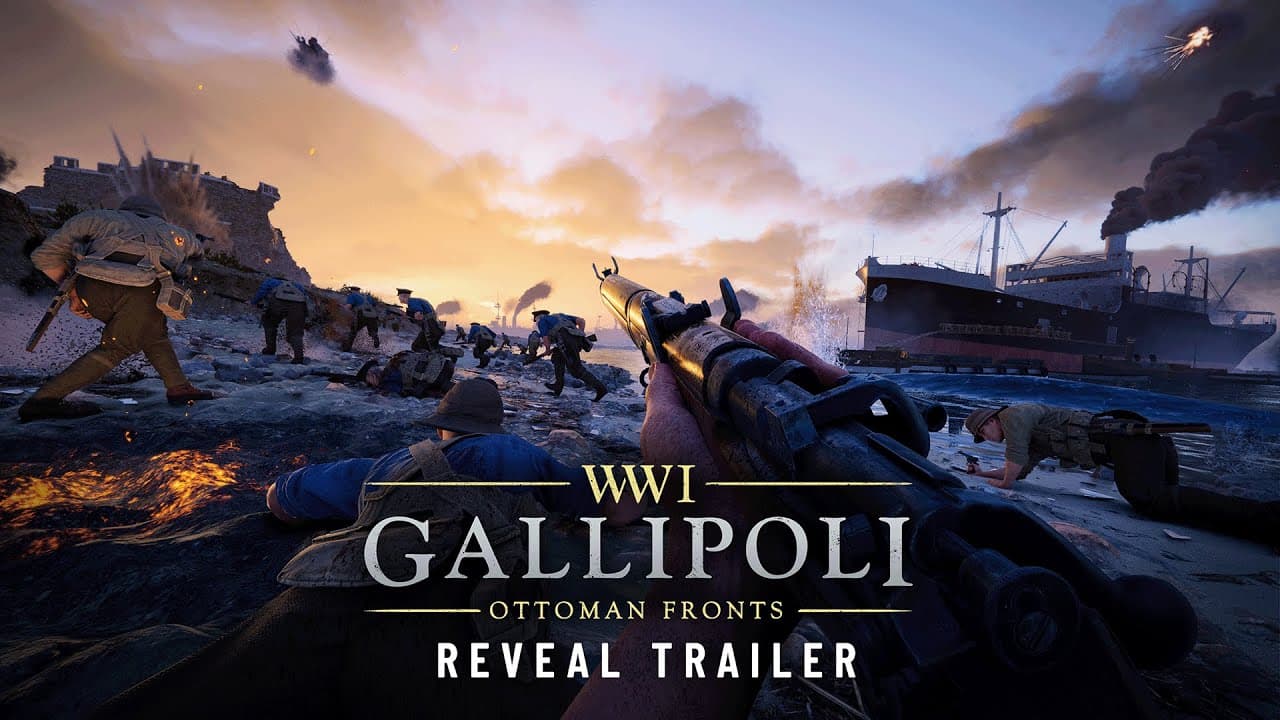
To elevate overall graphical fidelity, the team increased mesh detail and triangle counts to create sharper, more realistic environments. “As an FPS, we need to maintain visual quality across the entire world, which can be quite challenging,” says van Halteren. “We had to balance detail and complexity.”
Texture fidelity was another key focus. To achieve higher resolution and visual consistency, the team reduced material merging to preserve texel density and made smarter use of detail textures across surfaces and character assets. They also invested in more historically accurate character models.
“Our character artist revisited some of the older Verdun models and saw room for improvement. Now, our characters are of the highest fidelity we’ve ever achieved.”

Gallipoli | BlackMill Games
Overhauling the animations
The animation overhaul deepened the realism and cohesion across the game’s visual systems. By unifying animation, lighting, and worldbuilding tools, the team built a more flexible, cinematic foundation for both gameplay and storytelling.
“Unity’s Timeline became the backbone for orchestrating cinematics and in-game events, supporting motion capture playback and dynamic time-of-day transitions used in trailers,” says Evans. “Cinemachine evolved from a trailer tool into a fully integrated camera system for us, enabling smooth transitions and a reactive camera shake without breaking immersion.”

Gallipoli | BlackMill Games
Adopting Unity’s Animation Rigging Package resolved legacy IK limitations from Isonzo and significantly improved character grounding and weapon handling. Features such as Foot IK and dynamic weapon equipping gave the team finer control over movement and posture, while spline-based animation added realism to complex assets like HMG belts and mechanical components, which allowed pistons and bolts to move naturally without manual re-parenting.
“The addition of motion capture transformed base locomotion, giving soldiers a greater sense of weight and authenticity across mud, sand, and slopes,” adds van Halteren. “Every run, stumble, and climb now reflects the physical strain of movement in varied terrain.”
Upgrading the environmental effects
The team significantly enhanced the game’s atmosphere through an overhaul of environmental lighting, weather, and water systems. Using Unity’s VFX Graph, they developed complex particle effects capable of rendering large-scale explosions, smoke, and debris with greater realism and efficiency. 6-way lighting ensured that the particles responded naturally to dynamic light sources under a variety of conditions.
“Through HDRP’s physically based lighting and fog systems, we simulated dynamic weather and battlefield atmospheres, from sunlight filtering through haze to dense, smoke-filled combat zones,” says van Halteren. “These improvements deepened immersion and strengthened the connection between environmental visuals and gameplay.”
HDRP’s integrated rendering tools also elevated the water systems across Gallipoli’s environments. “We achieved infinite oceans, rivers, and puddles supplemented with foam simulation, decals, caustics, and screen space reflections for seamless blending with terrain,” says Evans. “We also introduced water exclusion zones for small boats, resolving longstanding issues with earlier third-party tools.”

Gallipoli | BlackMill Games
Amplifying the volumetric lighting
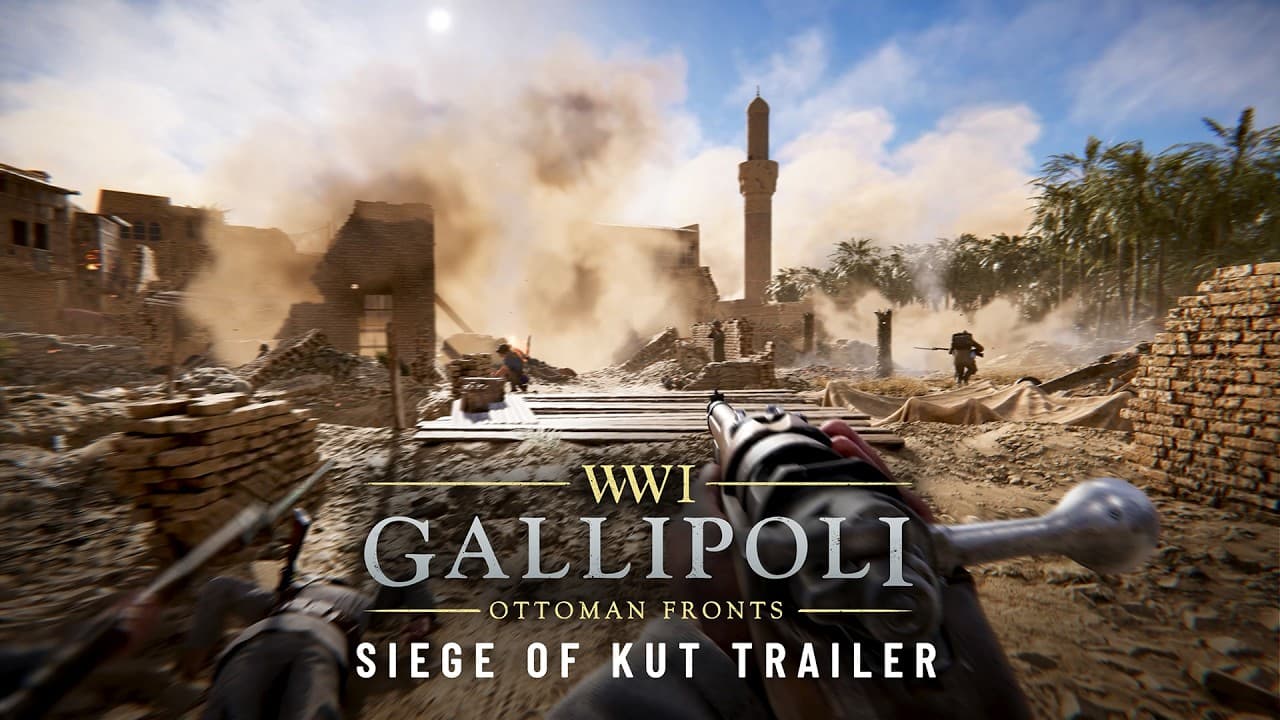
The team increased visual realism by fully harnessing HDRP’s volumetric lighting systems, creating richer atmosphere and depth across all environments. In dusty, arid settings, light now scatters naturally through haze, while lingering smoke and debris from explosions heighten immersion and cinematic impact.
“By adopting Adaptive Probe Volumes (APV), we replaced traditional lightmaps and cut bake times from about 30 minutes to just a few,” says Michal Wilczynski, a programmer at BlackMill Games. “This enabled faster iteration, dynamic per-pixel lighting for characters and environments, and reduced memory usage.”
A unified Shader Graph workflow streamlined both shader development and visual consistency. The team built a custom node library for terrain blending, texture packing, and surface gradients, while full source code access allowed custom code injection for unique rendering needs. Tools like the Rendering Debugger and Performance Panel also supported the workflow for quick in-game testing.

Gallipoli | BlackMill Games
Optimizing game performance and stability
Performance optimization was a core focus, combining Unity tools and custom workflows to keep gameplay smooth under demanding conditions. “The C# Job System enabled safe multithreading for expensive operations, achieving speed gains of up to 10,000x for tasks like raycasting, mesh modification, avatar baking, and AI vision checks,” says Wilczynski.
The Burst compiler further boosted scripting efficiency, while daily profiling with the Unity Profiler helped the team identify bottlenecks in network and GPU performance.
“Key systems were reworked to solve longstanding issues. Shadow rendering transitioned to real-time lighting, with directional cascades updating lazily for distant terrain, improving frame rates,” says Wilczynski. “Camera stacking for a scope view reused shadow and culling data, eliminating heavy overhead from previous projects.”
Leveraging Unity 6 provided significant performance gains. The Rendering Debugger enabled real-time analysis and shader inspection, while vertex LOD debugging helped the team fine-tune LOD setups visually. VFX overdraw debugging further optimized transparency and particle usage. These tools allowed the team to retire legacy third-party assets such as Perfect Culling and integrate seamlessly with the GPU Resident Drawer for more efficient culling and rendering.
Looking back on development
Reflecting on the development process, the team identified key lessons and opportunities for improvement. Evans mentioned that using reference cameras to track visual and performance changes over time would have provided clearer production benchmarks.
van Halteren emphasized that cohesion is key: A strong color palette, controlled noise, and consistent visuals make a significant impact. He also highlighted the importance of look development early in the process, noting that spending time polishing the first 25% of the game sets the tone for the remainder of development.
These insights underscore the value of planning, experimentation, and early attention to detail – lessons that will surely guide the team into the future.
Download Unity Pro today
Start creating games that compete with, and surpass the quality and success of big studio releases with help from powerful tools, support, verified partners, and a vibrant community.